About The Song
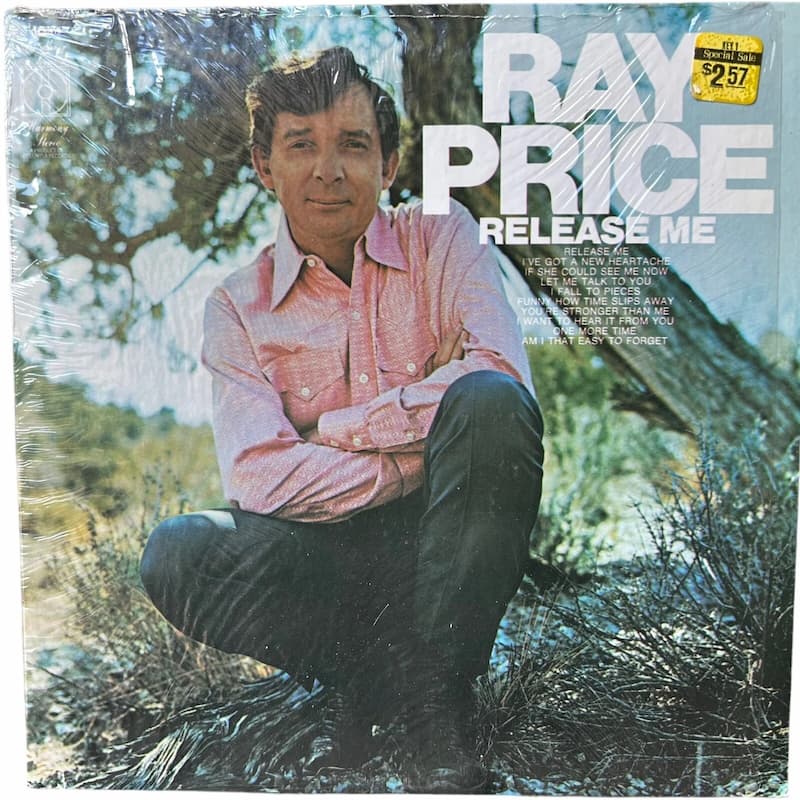
“Release Me” emerged as a pivotal country single for Ray Price, recorded on December 28, 1953, and released in January 1954 via Columbia Records. It served as the B-side to “I’ll Be There (If You Ever Want Me),” which itself peaked at No. 3 on the Billboard Hot Country Songs chart. The track didn’t initially tie to a full studio album but later appeared on compilations like his 1957 album Ray Price Sings Heart Songs and the 1971 collection Release Me on Harmony Records, a budget label reissue that bundled early hits. Produced in Nashville during Price’s early honky-tonk phase, the song runs about 2:40, featuring a straightforward shuffle rhythm with fiddle and steel guitar backing Price’s emotive baritone. This arrangement captured the raw, heartfelt style that defined mid-1950s country, emphasizing vulnerability over polish.
The song was co-written by Eddie Miller, Robert Yount, and James Pebworth (under the pseudonym Dub Williams) around 1949. Miller, a pianist and songwriter struggling in Nashville, penned it after failing to place other tunes. Frustrated, he recorded a demo himself in 1949 on 4 Star Records, but it flopped commercially. The breakthrough came when fellow country artist Jimmy Heap cut it in 1953, followed closely by Price and Kitty Wells. Price’s version stood out for its sincerity, turning a plea for emotional freedom into a relatable anthem. In interviews, Miller later shared that the lyrics drew from a real breakup he witnessed among friends, flipping the typical love song by focusing on mutual release rather than clinging on. He often joked that the song’s persistence mirrored his own career hustle—knocking on doors until someone listened.
Chart-wise, it climbed to No. 6 on the Billboard Hot Country Songs, marking one of Price’s early top-10 hits and helping establish his “shuffle” sound. This success paved the way for his later No. 1s like “Crazy Arms” in 1956. Though not his biggest, it gained longevity through covers: Kitty Wells’ simultaneous 1954 version hit No. 8, while Little Esther Phillips took it to No. 1 on R&B charts in 1962 with a soulful twist. The most famous rendition came from Engelbert Humperdinck in 1967, topping UK charts and reaching No. 4 in the US, blocking the Beatles’ “Penny Lane” from No. 1 in Britain—a quirky chart battle Miller celebrated.
A lesser-known tale: During a 1954 promo tour, Price performed it at a Texas radio station where a listener called in, saying the song gave her the words to end a stagnant marriage amicably. Miller, who earned royalties from the hit, used the windfall to buy his first home, crediting Price for “releasing” him from financial woes.
Video
Lyric
Please release me, let me go
I don’t love you anymore
To live together is a sin
Release me and let me love again
I have found a new love dear
And I’ll always want her near
Her lips are warm, while yours are cold
Release me darling, let me go
Oh please release me, let me go
I don’t love you anymore
To live together is a sin
Release me and let me love again