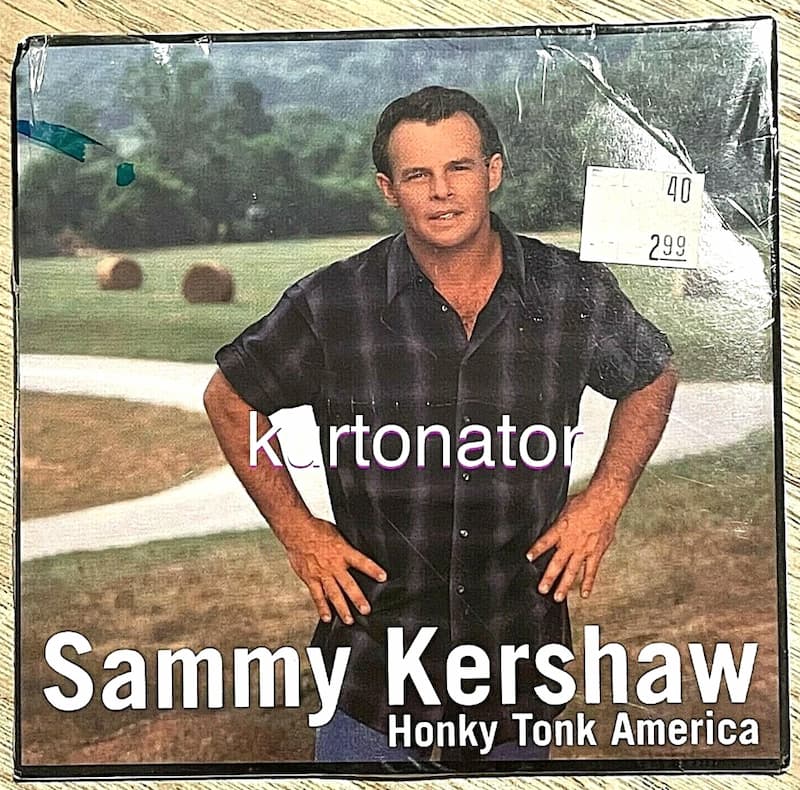
About The Song
Honky Tonk America by Sammy Kershaw arrived as a single in late June 1998, drawn from his fifth studio album Labor of Love, which Mercury Nashville had released the previous November. The album itself climbed to No. 5 on the Billboard Top Country Albums chart and eventually earned platinum certification, marking one of Kershaw’s strongest commercial showings of the late 1990s. “Honky Tonk America” became the third single from the project, following the big hit “Love of My Life” and “Matches.” It peaked at No. 31 on the Billboard Hot Country Singles & Tracks chart and reached No. 37 on the Canadian RPM Country Tracks list.
The song was written solely by Bob McDill, one of Nashville’s most respected and prolific songwriters of the era. McDill had already supplied Kershaw with the chart-topping “She Don’t Know She’s Beautiful” earlier in the decade, and his catalog included classics for artists ranging from Don Williams to Alan Jackson. Known for sharp storytelling and a deep feel for ordinary Southern and working-class life, McDill turned in a track that felt like a natural fit for Kershaw’s straightforward, honky-tonk-leaning style. Produced by Keith Stegall, the recording runs just under four minutes and opens the Labor of Love album as its first track.
At its heart, “Honky Tonk America” paints a vivid picture of the places where blue-collar men and women go to shake off the week. The day ends when the sun comes up and begins when it goes down, the song says, out on the back roads and back streets of farm and factory towns. In the world of weekly wages there is always a neon-lit refuge waiting. On Friday night the room fills up, the band plays familiar rock-and-roll country favorites like “Louie Louie,” “Proud Mary,” and “Wooly Bully,” and for a few hours everything feels all right. The names and faces may change from town to town, but the feeling stays the same: a blue-collar place, a red-blooded crowd, a temporary escape from long hard days and long hard lives.
McDill’s writing captures both the weariness and the camaraderie of that world. A flashing sign on a rain-soaked street becomes a welcome beacon when someone is tired or has lost heart. People may claim they come only for the drinks and the band, yet something keeps drawing them back. The song never turns preachy or overly sentimental; it simply observes the ritual and the relief it provides. In that sense it sits comfortably alongside other late-’90s country records that celebrated the working man’s night out without pretending the struggles of the daytime disappeared.
Labor of Love as a whole leaned more toward ballads than some of Kershaw’s earlier, rowdier albums, yet “Honky Tonk America” stood out as a reminder of the traditional sound that first brought him attention. It was not a massive radio smash, but it found a steady audience among listeners who still wanted songs about real places and real people rather than pure pop gloss. The track has since appeared on various compilations and remains a solid example of mid-to-late-’90s country that kept one foot planted in the classic honky-tonk tradition.
Bob McDill’s reputation for observational writing helped the song feel authentic rather than manufactured. He had long specialized in portraits of ordinary lives—small towns, hard work, the quiet rituals that hold people together—and this number fits squarely in that line. For Kershaw, already established as a reliable voice of neo-traditional country with a Louisiana edge, the song offered another chance to sing about the world he knew from years of playing the same kinds of rooms the lyrics describe. It may not have reached the heights of his earlier Top 10 hits, but it remains a clear-eyed snapshot of a certain slice of American nightlife that still feels familiar more than twenty-five years later.
Video
Lyric
Well the day it ends when the sun comes up
And it starts when the sun goes down
Out on the backroads and on the back streets
Of every farm and factory town
There in the world of weekly wage
There’s always a place out there
And the names and the faces are the same everywhere
Well the room is full it’s a Friday night
We all wanna hear Louie Louie
Been a long hard day and a long hard life
And this is how we make it through it
It’s a blue collar place a red blooded crowd
Tonight everything’s all right
In honky tonk America
There’s a flashing sign on a rain soaked street
That lights up just about dark
A welcome beacon on life’s highway
When your weary and when you lost heart
Never say its loneliness
It’s only the drinks and the band
But something brings us back here again and again
Well the room is full it’s a Friday night
We all wanna hear Proud Mary
Been a long hard day and a long hard life
We all got our crosses to carry
It’s a blue collar place a red blooded crowd
Tonight everything’s all right
In honky tonk America
Well talk about freedom alright but maybe some other time
Tonight everyone’s feeling fine
Well the room is full it’s a Friday night
We all wanna hear Wolly Bully
Been a long hard day and a long hard life
Monday morning well all do our duty
It’s a blue collar place a red blooded crowd
Tonight everything’s all right
In honky tonk America
Honky tonk America
Honky tonk America
Honky tonk America
Honky tonk America