In November 2016, fire tore through the Great Smoky Mountains and into Sevier County with a speed that left almost no time to think. Fourteen people died. More than two thousand structures were damaged or destroyed. In a matter of hours, families who had built their lives among those ridges watched their homes vanish into ash. The question that followed was brutal in its simplicity: how do you begin again when the place that held your photographs, your children’s beds, your sense of belonging is gone?
Dolly Parton did not wait for someone else to answer it. She had grown up in Sevier County. These were not distant victims on a news crawl. They were her people. Within forty-eight hours, while smoke still hung in the valleys, the Dollywood Foundation created the My People Fund and made a promise that was almost startling in its clarity: every family that had lost a primary residence would receive one thousand dollars a month for six months, cash in hand, no conditions, no lectures about how to spend it. The first checks went out in December.
Then the rest of the country answered with her. A telethon raised millions. Ordinary people mailed donations from places they would never visit. More than nine hundred families were pulled into the circle of help.
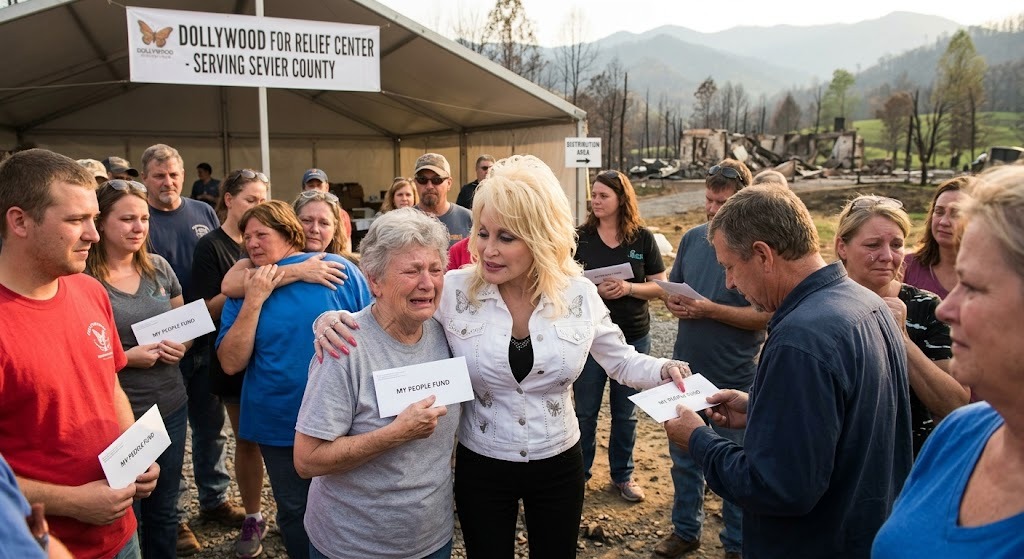
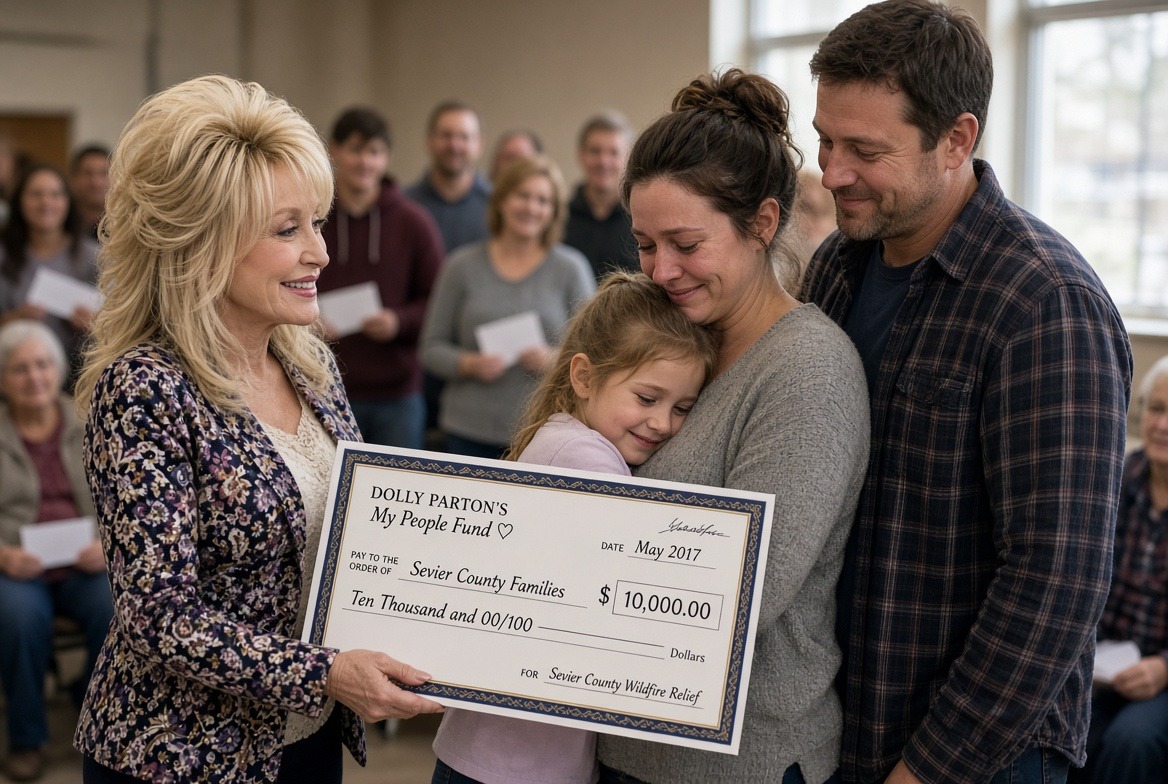
By May 2017, the last payment was supposed to be another thousand dollars. Families came to the LeConte Center in Pigeon Forge expecting closure of a kind — a final envelope, a polite ending to a hard season. Dolly came too. She did not send a statement. She stood among them, handed out checks herself, listened, hugged, and then turned the last payment into five thousand dollars.
Five months of one thousand, and a sixth month of five. Ten thousand dollars in all for each family. About $8.9 million placed directly into the hands of people who had lost nearly everything. She told them the money could not rebuild a life by itself. She hoped only that it might help them dream again.
That is the part that still catches in the throat. She did not make a single grand gift and disappear. She built a system that delivered help month after month, then used the surplus — money she had never promised — to give more. What remained after those checks were written, at least three million dollars, went to the Mountain Tough Recovery Team so the work could continue: transportation, medical bills, the quiet necessities that arrive long after the cameras leave.
For families standing in the wreckage of a house, that extra four thousand dollars was not a publicity flourish. It was another month of rent. Another chance to replace what fire had taken. Another reason to believe that home, somehow, might still be possible.