About The Song
Songwriter Johnny MacRae didn’t decide to follow a career in music until he was in the last five years of a 15-year stint with the Navy. One of his shipmates had a relative who worked at KFWB Radio in Los Angeles, and through that connection, MacRae earned his first recording and publishing contracts.
His own records made very little impact in the Los Angeles area. However, MacRae participated on Bobby “Boris” Pickett’s novelty pop hit “Monster Mash.” He was part of the “Crypt-Kickers” band on the record, creating strange sound effects with electric razors, ratchet wrenches and chains. As goofy as it was, “Monster Mash” climbed to the #1 position on Billboard’s Hot 100 pop chart and held it for two weeks in 1962.
In June of ‘63, MacRae moved to Nashville, drifting from publisher to publisher for nearly a decade without much success. Finally in 1972, he ended up at Combine Music and became a vice-president of the company. While at Combine, MacRae helped cultivate the talents of younger writers such as Bob DiPiero, John Scott Sherrill and Pat McManus, but he also wrote a number of top country hits himself, often with frequent collaborator Bob Morrison. One of their biggest was Conway Twitty’s chart-topper, “I’d Love To Lay You Down,” in 1980.
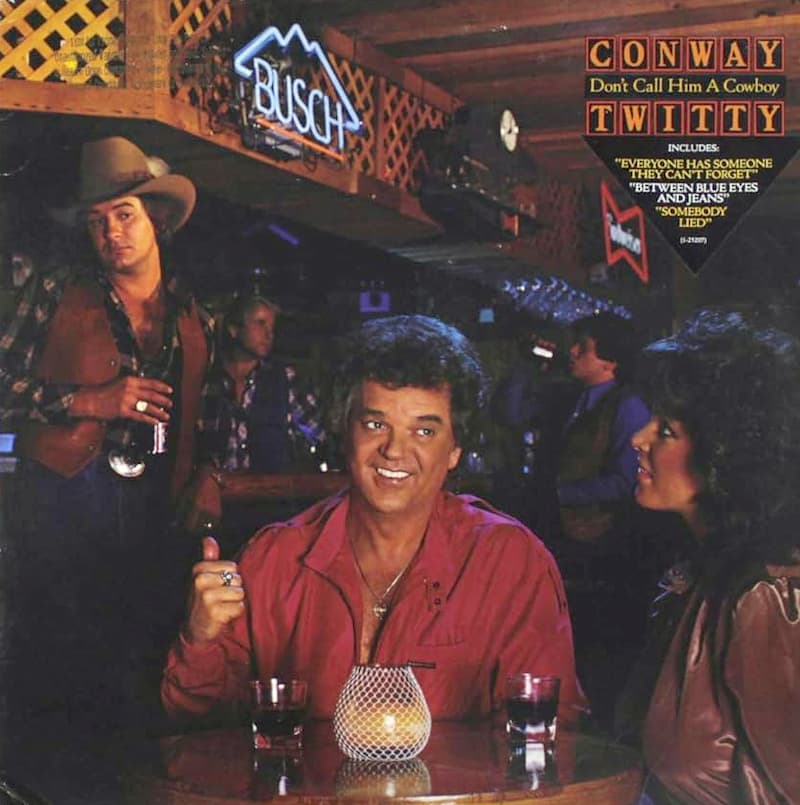
After forming his own publishing company in the mid-‘80s, MacRae logged another number one hit with Conway called “Don’t Call Him A Cowboy.” He wrote the chorus during the height of the “Urban Cowboy” craze in America, when it seemed everybody wore cowboy hats and jeans. MacRae thought the chorus was in pretty good shape, but he was struggling with the verses. He wrote several versions but wasn’t happy with any of them. Finally, Johnny discussed the tune with Debbie Hupp, telling her his ideas about it and showing her what he had so far.
Debbie took the rough draft of “Don’t Call Him A Cowboy” back to her home in Louisville. After working on it for a couple of days, she telephoned MacRae with the suitable lyrics. Bob Morrison helped shore up the melody, and suddenly, they had a very workable song.
The songwriters instantly earmarked Conway Twitty as the performer of “Don’t Call Him A Cowboy,” as he always seemed to enjoy stirring up the pot with his songs containing controversial lyrics (and this tune certainly had some), plus sexual innuendos in songs always meant big hits. “Don’t Call Him A Cowboy” didn’t disappoint. On the June 1, 1985 Billboard country singles chart, Conway rode tall in the saddle at #1, enjoying his 39th (and next-to-last) chart-topper.
Video
Lyric
So you came from New York City
And you want to see the sights
You’ve heard all about those cowboys
And their crazy Texas nights
I see you’ve got your eye on something
Leaning on the bar
But the toughest ride he’s ever had
Was in his foreign car
So don’t call him a cowboy
Until you’ve seen him ride
‘Cause a Stetson hat and fancy boots
Don’t tell you what’s inside, no
And if he ain’t good in the saddle
Lord, you won’t be satisfied
So don’t call him a cowboy
Until you’ve seen him ride
He’s the Hollywood idea
Of the wild and woolly west
In his French designer blue jeans
And his custom tailored vest
You thinking he’s the real thing
But I think you ought to know
He can’t even make it through
A one night rodeo, no
So don’t call him a cowboy
Until you’ve seen him ride
‘Cause a Stetson hat and fancy boots
Don’t tell you what’s inside, no
And if he ain’t good in the saddle
Lord, you won’t be satisfied
So don’t call him a cowboy
Until you’ve seen him ride
Don’t call him a cowboy
Until you’ve seen him ride
‘Cause a Stetson hat and fancy boots
Don’t tell you what’s inside, no
And if he ain’t good in the saddle
Lord, you won’t be satisfied
So don’t call him a cowboy
Until you’ve seen him ride
Don’t call him a cowboy
Until you’ve seen him ride